Saturday, October 22, 2011

Essential Book: Centering Prayer by M. Basil Pennington


Fr. Pennington, a Cistercian, wrote this book in the late 1970's after a series of popular retreats and lectures. It was well received and sold just as well. This was and is a sign of the spiritual hunger that we all have built into us. Real people want to know how to pray. He offers a method that gives us both permission and a starting place to learn prayer. "Centering Prayer" is Roman Catholic in its scholarship and viewpoint but is much broader that one might think. A non-Christian will find resonance here as much as I did as a non-Roman Catholic.
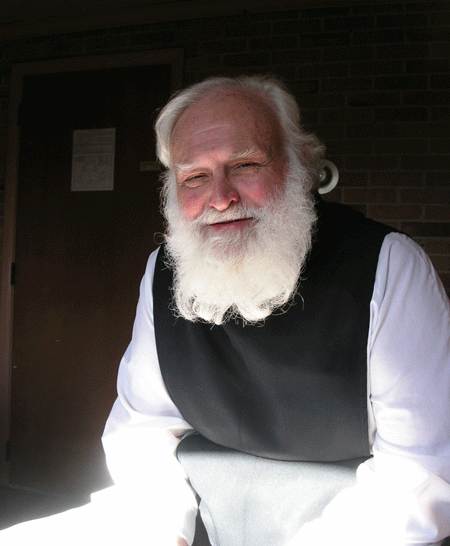
Fr. Basil Pennington
July 23, 1931-July 3, 2005
Is meditation consistant with Christianity?? I have to be reminded occasionally that I need to pray-or better said, I need to NEED to pray. I began 'Centering Prayer' as a Lenten thing and to further the discipline of reading an old book for every new one. I actually put it on my "to read" list after hearing it outlined during a seminar several years ago. I found this paperback copy for 50 cents at a used book sale last month. It has been a move of God's Grace.


Pennington's writing style is efficient and clear though he gives numerous lengthy quotations from many of the church fathers. You will have to wade through a lot of history, some Latin terms and other jargon. Prepare yourself for the first 60 pages. They are confusing unless you have read some Merton, Desert Fathers and other Christian Mystics. HOWEVER, it it worth the effort and prepares the reader for the method. The writer offers a practical way to answer the question:

Is Meditation Un-Christian? The short answer is no-we just call it contemplative prayer. The most word-centered evangelical cannot deny that our delight in God is to "meditate day and night" on scripture. Sometimes we forget about the oriental influence on Christianity and Judiasm. Why should the eastern religions have a lock on this anyway. It is scriptural and grows the Disciple.

Pennington defines "Centering Prayer" as, "any method by which the pray-er seeks to bring his or her scattered thoughts and feelings together for a certain deepening." (61) It is neither new nor unique to this book but an application of ancient Christian praxis. The 3-rule "formula", 1-take a minute to quiet down;2- Rest in the Center by the use of a "prayer word" that can be repeated until we achieve that meditative rest; and 3- to use our prayer word when we become aware of anything that disturbs our prayer filled center to return to prayer. End with or "come out" of prayer time with an "Our Father" or other formula prayer (65) The successful end to the method is that it is no longer needed.

The method's essence is in the prayer word. Eastern meditation would call this a mantra, though the author hesitates to use that word. Deriving your prayer word is the crucial first step in prayerful "rootedness or centeredness." To find God we need quiet. To find quiet in such a noisy world we need a starting place. That start comes with " a quieting word, a gentle word, a soft word that quiets the mind and allows the heart space." (71) The chapter on "New Packaging" is basically a commentary on the book, "The Cloud of Unknowing" and gives wise counsel on choosing your unique prayer word.

Set a particular place aside for prayer if possible, sit quietly and allow yourself time, at least 20 minutes. Lots of busy people do this in the shower-it may be the only quiet some get during the day. Begin by repeating your prayer word, keep it simple, and allow the prayer word to fade into silence. stay in this centered place and listen. God has something to say to you-and probably won't use words.

The question that I most often get when teaching prayer is, "What do I do with these distracting thoughts that I have?" Centering Prayer is a healing and nurturing time with God that is destroyed by external thoughts. These thoughts are wild monkeys swinging through our minds and stealing intimacy with God. Pennington's Chapter 6 deals lends a five way strategy to deal with them by using the gentle assertion of your personal prayer word. These are five common types of thoughts that disrupt our prayer and meditation.

The first type of though is the "Simple Thought". These are the natural and steady stream of thoughts that simply need to be put aside by using your prayer word to deny them a hand hold. Second is the "Catching Thought" that hooks us and comes to us during the course or prayer. They are born in prayer and can drag our awareness away. We must hold tenaciously to the prayer word "which capsulates the the fullness of my faith-love relationship with God." (105) You don't quit but renew your prayer. Third are the "Monitor Thoughts". These are very troublesome because they tempt us to make prayer a production event or worse a celebration of what we are doing. To conquer this we must remember who we are praying to and "ruthlessly" insert the prayer word and return to the presence. Fourth are the "Bright Idea" thoughts. These tempt us to leave prayer to go and do something-probably something good but half baked if we allow it to interfere with our prayer. Don't quit. Center with the prayer word and complete the time of prayer. Fifth and finally, the "Stressful Thoughts". Prayer can bring us stresses from relations and situations in our daily lives. It is this type of thought that can halt the prayer that can bring healing of the stresser. Only by being aware and staying centered can we continue to experience God's presence in prayer. (P. 103-110)

This process is better learned with a spiritual director or a trusted Christian friend that shares your journey. However, God has given you a sufficient amount of information to discover deeper prayer on your own. Pennington parallels Centering/contemplative/meditative Prayer with Sleep. "Just as dreams release tension from our lives while we sleep, so too do thoughts and images that flow through our minds while we are resting in contemplative prayer." (p. 109) In this contemplation God is given our thoughts and takes over.

We need an action to end also. The author suggests using the Lord's Prayer or other formula prayer as a way to "come out" of prayer. A favorite scripture, poem or song would work also. End this precious time with a formal invitation for God to come with us on the rest of our journey.

We begin with a process. We will know that it is successful when it disappears and we no longer need it.

The author is clear that prayer method is only to assist and the purity of prayer can only be achieved when kept very simple. The key is to be in touch with Christ and to "Know Thyself" before plumbing deeper spiritual depths. The book also provides written prayers, daily schedules, retreat outlines, relaxation exercises and other helps. His method is useful for all of us "Martha/Active's" who secretly want that "Mary/Contemplative" prayer experience. The Bibliography is rich with resources too. Many of them are public domain and on Google Library.

The book begs to be used. Here is how I applied it to my day-to-day. Each year I study the Psalm of my age. A United Methodist Bishop started me on this discipline several years ago. My "prayer word" comes from Psalm 52-"I trust in the steadfast Love of God". When my day gets distracted I say this until I actually hear it. At the top of the hour I take a full moment of quiet meditation, centering on this psalm and afterward write a short prayer in my journal. I seek the quiet daily for the suggested 20 minutes at a time too. I am blessed to have an office and a prayer garden at work and am building on at home too. However, even in my busiest times I can find that 2-3 minutes to center up the next hour. The very busiest among us can will a precious centering moment without regard to the noise, haste or place. The fruit of this practice is rich and healthy everyday living. Christian prayer/meditation is practical.


Inspiring: Nick Vujicic's "Life WIthout Limits"


The word "inspiring" is generally overused but this book earns that description. All of our lives have challenges. Without perspective we can dissolve into our challenges rather than our purpose. Nick Vujicic's (pronounced Voy-a-chich)book "Life Without Limits" gives a victorious perspective on how we are not defined by our "handicaps". Nick was born without arms and legs. He has overcome any handicap from this physical reality to become and successful philanthropist, motivational speaker and evangelist. The mechanics of his abilities to drive, swim, surf, scuba dive and simply go to the bathroom are curious and amazing. This book celebrates victory, "ridiculous" victory.


Nick Vujicic
Life Without Limits - Nick VujicicThe first victory is that of hope. Nick writes, "I was never crippled until I lost hope. The second is faith. Only a firm vision of being a child of God and working within God's purpose plan could he live in victory. Thankfully he does not reduce his message into glib bumper sticker aphorisms. He does not leave out dark thoughts of suicide and the times that people let him down. Yet God's grace and Hope driven Faith is where he finds his motivation and sheds it onto the reader. The final victory is less explicit. His family system's response to his physical reality was miraculous. They had faith when he couldn't and did not allow him to be or become a cripple. His family paid a price for his resilience and the return on that investment is beyond dollars and cents. His family is amazing.

The book gives a lot of stories from childhood through ministry. His trip to South Africa is memorable but my favorite is when he took a ride on the luggage carousel in an airport. He shares part of his motivational program with his "Ridiculous Rules" and other bullet pointed teaching moments. "Life without Limits" is well written, a quick and infectious read, balanced with anecdotes and teaching, and shares an amazing network of ways to become a philanthropist. I am better for reading this book.

Thanks to Multnomah Press for giving me this book free in exchange for this review as a part of their bloggers for books program and thank you for taking the time to read this review. Alan Van Hooser, TheThoughtfulPastor Blog.

More details from the publisher are at http://waterbrookmultnomah.com/catalog.php?isbn=9780307589736

Addendum: The author is putting together a pretty respectable acting career. Check out the Butterfly Circus, a 20 minute short film, on YOUTUBE at http://www.youtube.com/watch?v=y_MCwlY6zzg.   The Aussies are building an industry for these high quality shorts and this is one of them. The more I see of this guy the more I like.
       
                                                         
                                                                           From The Butterfly Circus

David Platt's Radical Together-The old church in a contemporary world


www.desiringgod.org

Those who came to faith in the "church growth" or the "seeker" movements might see this as a rant. Rather I see it as a corrective to the many ways that the ark of faith has become a cruise ship. The writer dissects the many ways that we have aggrandized our buildings and programs and taken our eye off of our Biblical mission to,"transform people into the image of Christ and to get people in touch with the Holy Spirit of God,.." (49) This is more of a motivational book than one of theology. The desired outcome is to form small groups in the home church to proclaim and act on this mission, not to merely talk about it.

The Gospel's story is about the Basic truth of God intertwined in the human struggle to proclaim it. David Platt in "Radical Together" offers us a place to take that struggle beyond the individual and into the local church. "Radical Together" is an energized look at the personal mission Through this book he takes the notion of mission to its proper scriptural end, forming a growing community of faith.


"Radical Together" is a compact, very readable 165 pages. Platt ends it with a simple and usable group study guide. He does a good job of balancing personal stories, theology and motivating the reader to do-ing. He takes some of the common misrepresentations of God and surrounds them around the loss of the dependenceon God that many our local Christian communities seem to have . Where the above mentioned "movements" have failed is in thinking that we can succeed by merely organizing, scheduling or speaking of Christ in the correct manner. Platt proclaims "Constant Dependence" as the foundation of a satisfying life for a person and a genuine mission as a people. He also gives some hands on ways to recognize and reclaim that dependence.

This is a good and solid book for individual motivation that leads to group proclamation. Read it and "Give God no rest". Thanks to Mulnomah press for giving me this book for free in exchange for this review and thank you for reading it. You can read the first chapter for free at http://waterbrookmultnomah.com/2011/02/14/sneak-peek-radical-together-by-david-platt&ref=banner_wb_radicaltolb/


Amanda Ripley's: "The Unthinkable:Who Survives When Disaster Strikes and Why"


Our lives are marked by spiritual milestones, regardless of our concept of God, religion and spirituality. Since August of 2005 many of my milestones have taken names like Katrina, Rita, Gustav, Humberto and Ike. Hurricanes have been deeply spiritual events and the recovery from them have shaped my personal ministry. I read and train in Crisis and Trauma counseling and Critical Incident response. I do this for my own personal healing as well as preparation for moments of ministry that will come my way. Email me for a book list if you want one but if you only read one, read The Unthinkable.

Ripley is a journalist from Time Magazine. Her perspective differs from the sociologists, theologians and psychologists that write much of this genre of books. She is clear, concise, interesting and writes with integrity-see her comments on not paying for interviews from chapter 8 and found on page 245. This is not the end all of disaster response and recovery but it gives a rich list of things to 'bulk up our brains' and build resiliency both as individuals and as a group.

"in this plane crash (flight 1549 in Jan. 2009) , like other major
disasters, people tend to stay calm, quiet and helpful to others."
Most response and preparedness material focus on the disaster or protocols of response. They dot in a few stories for color but the end is the same-flexible answers to what happened. Amanda Ripley look at a wide variety of disasters from the perspective of the survivor. Answers to "Who Survives and Why?" is her quest. While there is no single solid answer the book's aim is to provide people who aren't in crisis at the moment a with a new way of survivor-thinking.


The commentary on the relatively new science of evacuation is interesting and informs us on how to get out of a public place. Ripley challenges notions that limit our survivability while offering a healthier way to think about crises that haven't happened yet-and for that matter may never happen. For example, one of the key issues in the survivors of the 9-11 attack-especially the female survivors-was their shoes. Those in practical, though not fashionable shoes, were more resilient and hence more able to get out. As individuals were more resilient, the group became more able to survive.


Why are some more resilient in a disaster??  How can I be more resilient
Her thesis, found in the notes on page 225, offers a clear truth for students of crisis intervention and study. She writes, "Survivors offer our greatest hope for reconstructing disasters-not just the plot, but also the smells, the sounds, and the spontaneous acts of kindness. Their memories of the banal and the horrifying are portals into the unknown."


This was an excellent and valuable read. DON'T skip the introduction and the author's note. They are important.

Charley Gordon's "In Plain Sight": More than pretty pictures


The myriad of devotional instruction books out there start running together after a while. This one is different for two reasons. First is that it comes from the perspective of a scientist and not a spiritual director or theologian. Second is due to the fact that I can review the author and not just the work. Charley is the neurosurgeon that did a delicate back surgery on my wife last September. He is the first surgeon that prayed with us and he exhibits Christ with integrity.


Charley Gordon, MD provides visual explosion of God's creation. Pictures and a daily/weekly Bible reading lead the reader through the process of seeing the seen and the un-seeable. For example, a photo of a finger print that is paired with a photo of zebra stripes followed by a short and sincere commentary on God's unity in diversity. With this is an invitation to set a tone for seeing our lives more clearly throughout the day. This is more than a book full of pretty pictures or scientific oddities. The woods are full of those. "Plain Sight" moves the reader to a deeper walk with God in Christ. I like the book. It is good for the observant Christian and the seeker alike, anyone looking for a smart, honest and spiritual way to find faith into the invisible part of creation.

The book is available through his ministry at http://www.designedonpurpose.com/ or from Amazon. The website also offers other articles of interest, Dr. Gordon's online journal and a newsletter. Buy two copies. This is one to share with someone who is seeking more of the spiritual life.    


God for the Good Ol' Boy: Average Joe by Troy Meeder


Average Joe: by Troy Meeder, is a book for the tailgate of a truck. Spiritually forming books and events typically appeal to women. It's a mars and venus thing, I suppose, but there is a perceived disconnect between "Spiritual" stuff and men's spiritual needs. Meeder is trying to build a bridge by taking a scriptural look at the needs and influence of the "average, ordinary and normal" men who can have an extraordinary impact on the world. Wrapped in Christ, these Average Joe's escape the macho and the discontented life to be men of "honor, integrity and covenant"...

He posted a good video on youtube at http://www.youtube.com/watch?v=kgMJXbaM8Jg&feature=player_embedded  well worth the time.

Troy is an Oregon cowboy and minister who tells the story of the life in Christ from a cowboy's life. He reinforces scripture through stories . There is nothing resembling a sermon as he speaks of horses, airplanes, soldiers, friends and boys. He writes plainly that a Christian man has tremendous influence while working on a car or cutting grass with someone. He does not gloss over God's testing but shares painfully transparent stories like working in a hole filling up with human waste and a moment of brokenness with his wife. Moments that all men share but yet rarely share with each other. Rather, we tend to "finish our eggs and go to work". The strength of the book is that it leads a man to both GET AND BE a mentor.


Pastor's and small group leaders-The book is only 148 very readable pages. The small group study guide at the end is short and makes one scriptural point at a time. It can be used by or taught to anyone who is willing. "Average Joe" would be a good small group or a "men and boy's" retreat guide. It is geared more for working guys but anyone will benefit. The book is jargon free, flexible and for people of all ages. Women will enjoy these stories and insights too. Often, they will be the only ones to get their men to pick this up and read it. Buy a copy,leave it laying around and see what happens.


I am struggling in starting a "Men's Ministry" at our church. This book may be the sparkplug to get something useful going. Check out an excerpt at http://waterbrookmultnomah.com/catalog.php?isbn=9781601423078&view=excerpt Multnomah press gave me this book for free in exchange for this review. Thanks to them for risking a bad review and thanks to you for reading the thoughtfulpastor blog.